Start with the site visit and the scope
A good service starts with an assessment of the trees and the site, in person when the case requires it. The proposal should say what will be done to each tree, with which technique, how many trees are included and what is left out. A proposal without a prior assessment tends to lead to adjustments and extra costs during execution.
Who carries it out and how safely
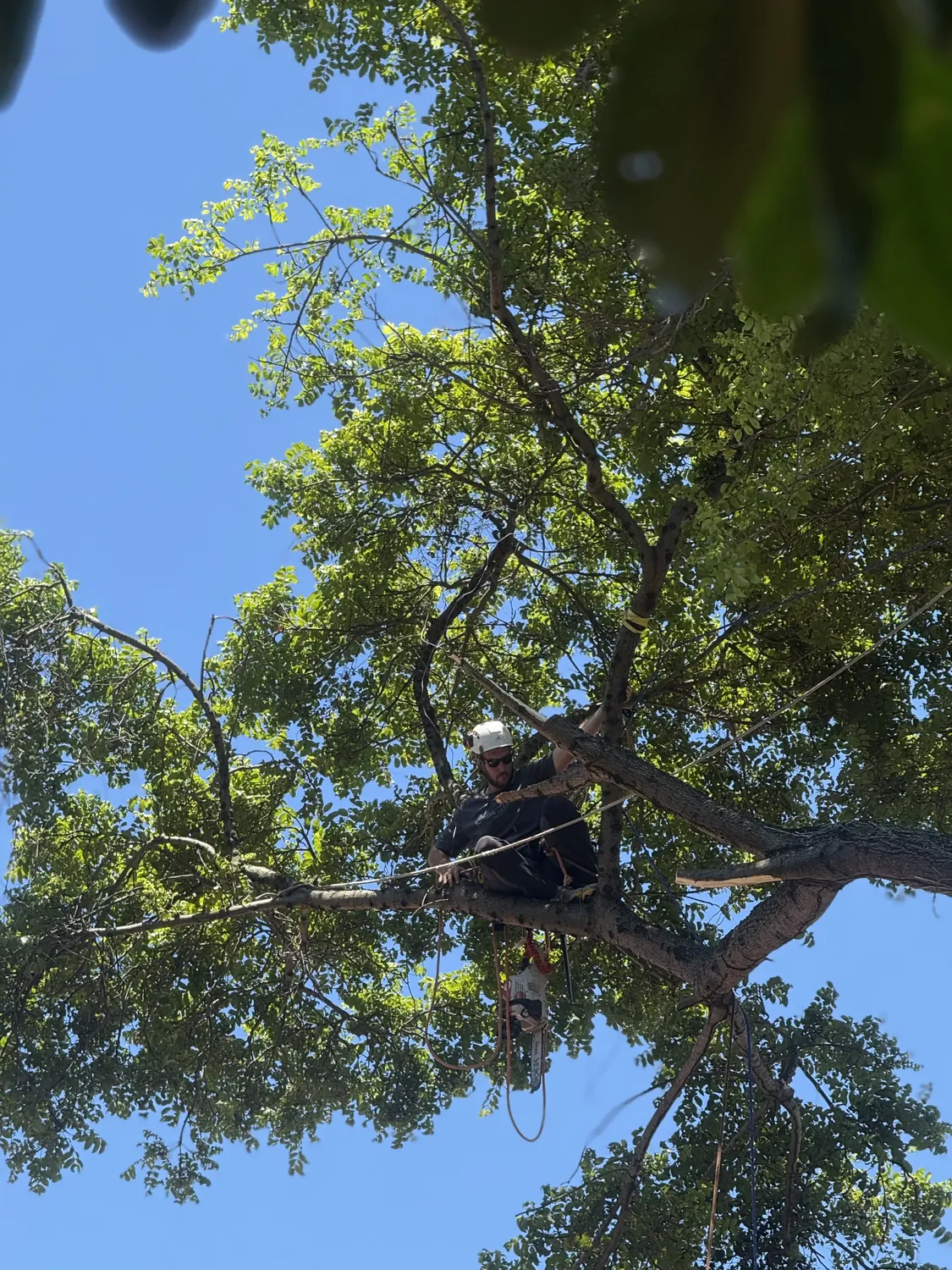
Ask about the training and experience of those who assess and those who carry out the work, training for work at height and rope access, protective equipment, isolation of the area and how branches will be lowered in a controlled way. In places with foot traffic, vehicles or utility lines, the safety plan is part of the service.
See how rope access works and when it is indicated.
Requirements and documentation
Ask who checks whether the intervention requires authorization from the competent authority, which documents and reports will be delivered and whether there is a technical person in charge when applicable. Requirements vary by location and situation; the company should be able to explain how it handles each case.
Waste, wildlife and cleanup
Agree on what happens to trunks, branches and leaves, whether the material will be chipped or removed and how the area will be left at the end. Also ask whether the team checks for nests, beehives or other animals before working in the crown, because that changes how the work is done.
How to compare beyond the total
Compare equivalent scopes: the same number of trees, the same technique, the same cleanup and the same deliverables. A proposal that looks smaller may leave out waste removal, the site visit or area safety, and whatever is missing tends to show up later. Hiring well avoids redoing the service and reduces the risk of damage during execution.
Warning signs
Be wary of a proposal without a site visit, of a promise to solve everything without assessing the tree, of topping offered as the standard solution, of a team without protective equipment and of a lack of clarity about authorization and waste destination. See also pruning or removal to understand the alternatives.