
Signs in the crown
Look for dead or dry branches, broken branches that stayed caught, a thinner crown than usual or yellowing leaves out of season, and very heavy branches or ones that extend over roofs, roads and walkways. Forks with bark trapped between the stems also deserve attention, because they tend to have weaker attachment.
Signs in the trunk
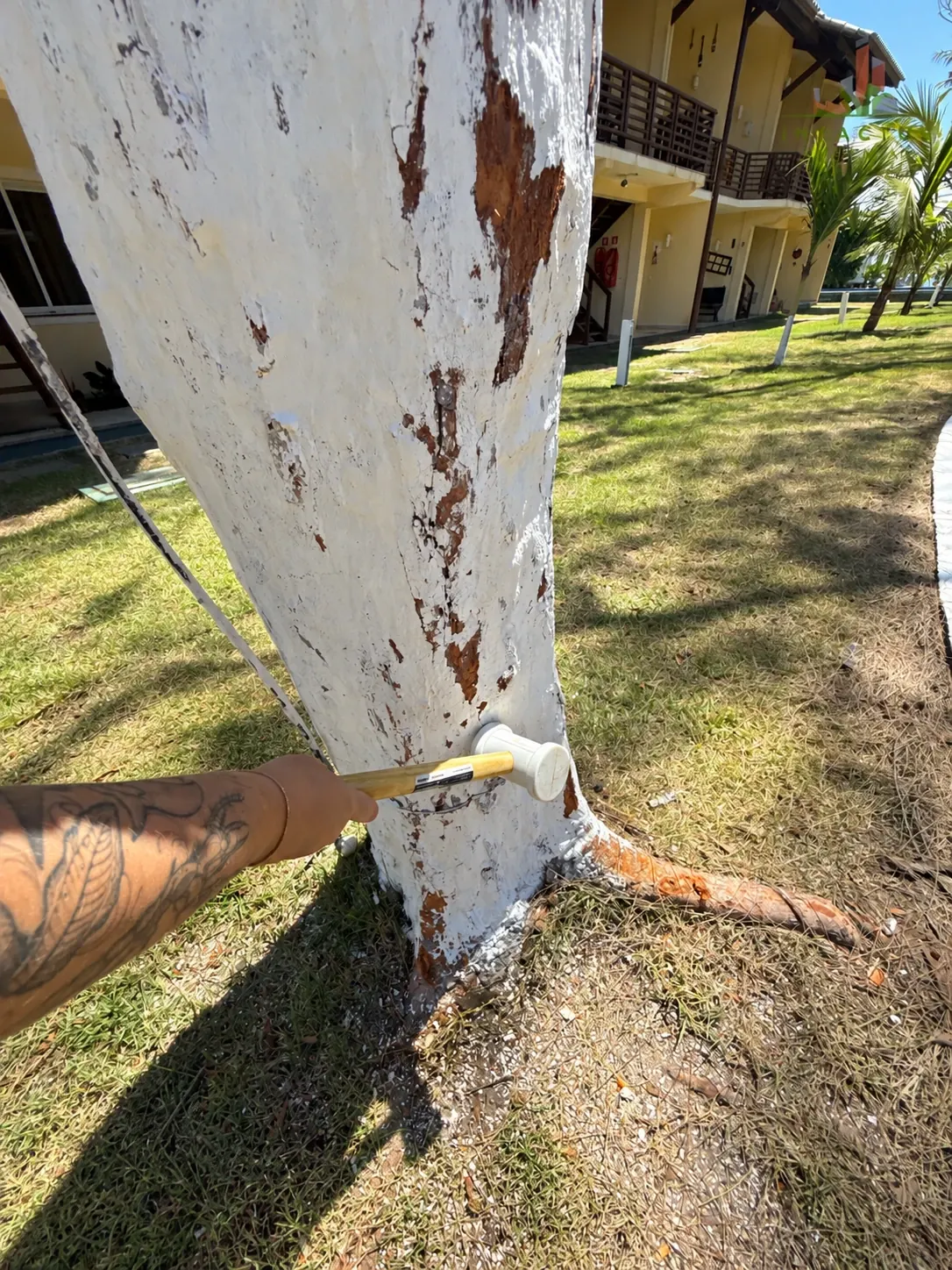
Cracks, cavities, loose bark, dark areas with oozing, termite nests and the presence of fungi or mushrooms on the trunk or base can indicate internal problems. A new lean, or one that increases over time, is also a relevant sign. Hollows or fungi do not mean the tree must be removed; severity depends on how much of the structure is affected.
Signs at the base and roots
Pay attention to lifted or cracked soil near the trunk, exposed or cut roots, recent digging, frequent flooding and paving that lifts. Nearby works, soil compaction and root cutting can compromise stability even years later.
Context changes the priority
The same defect carries different weight depending on what is under and around the tree: people, parked vehicles, buildings, utility lines and circulation areas. That is why the assessment considers the tree and the possible targets, not just the tree. Events such as heavy rain and strong wind increase the chance of failure and justify another look.
What to do when you notice a sign
If there is immediate risk, move people and vehicles away and isolate the area. Record it with general and detail photos and note the date and what changed. Do not try to prune alone at height, and do not approach trees touching power lines; in that case, contact the electricity utility.
After the assessment
The assessment may conclude that the tree remains safe and only needs follow-up, that pruning solves it or, in specific cases, that another measure is needed. See how this connects to the decision in pruning or removal and how a tree risk assessment works.